
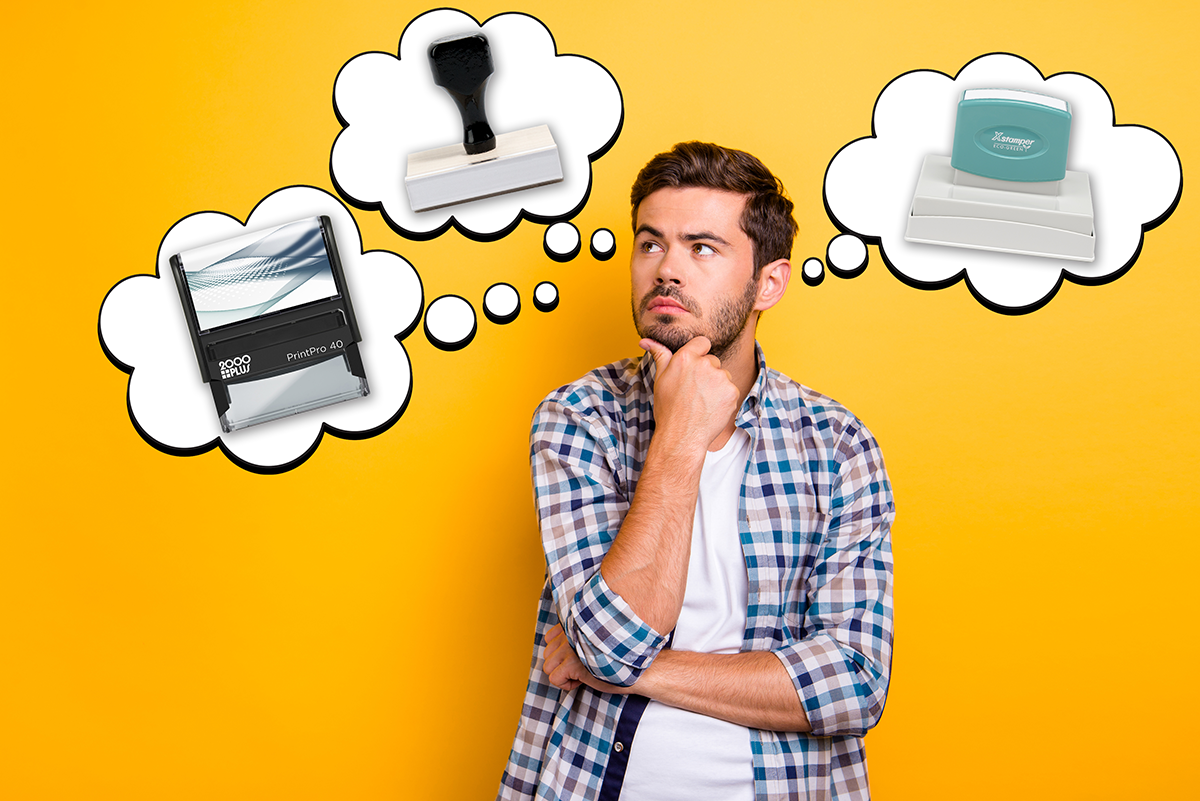
Choosing the Right Stamp Type: Self-Inking, Pre-Inked, or Traditional?
If you've ever shopped for a custom stamp, you've probably noticed three main options: self-inking, pre-inked, and traditional rubber stamps. While they all create impressions on paper, they differ significantly in convenience, durability, impression quality, and long-term value.
At stampersDIRECT, this is one of the most common questions we get. Below is a clear breakdown to help you confidently choose the right stamp for your needs.
Self-Inking Stamps: The Everyday Workhorse
Self-inking stamps feature a built-in ink pad that automatically re-inks the rubber die after every impression. This makes them fast, clean, and extremely user-friendly.
Best for:
- Return addresses
- Office message stamps (PAID, RECEIVED)
- Date stamps
- High-use office environments
Good to know:
- 3,000–5,000 impressions per ink pad
- Easy re-inking or pad replacement
- Multiple ink color options
Pre-Inked Stamps: Premium Precision
Pre-inked stamps store ink within the die itself, delivering ultra-sharp impressions with no internal movement.
Best for:
- Logos and fine detail
- Notaries and professionals
- High-volume use
Good to know:
- Up to 30,000 impressions
- Quiet operation
- Higher upfront cost, lower long-term cost
Traditional Rubber Stamps: Creative Flexibility
Used with a separate ink pad, traditional stamps allow complete color flexibility and artistic control. Be sure to include a stamp pad in your purchase.
Best for:
- Crafts and scrapbooking
- Budget-conscious buyers
- Decorative stamping
Which Should You Choose?
If you want convenience — choose self-inking. If you need detail — choose pre-inked. If you want flexibility — choose traditional.
Need help deciding? Our team is happy to guide you, and every order includes a free proof before production. Please feel free to reach out to sales@stampersdirect.com for questions or help ordering.
Leave your comment